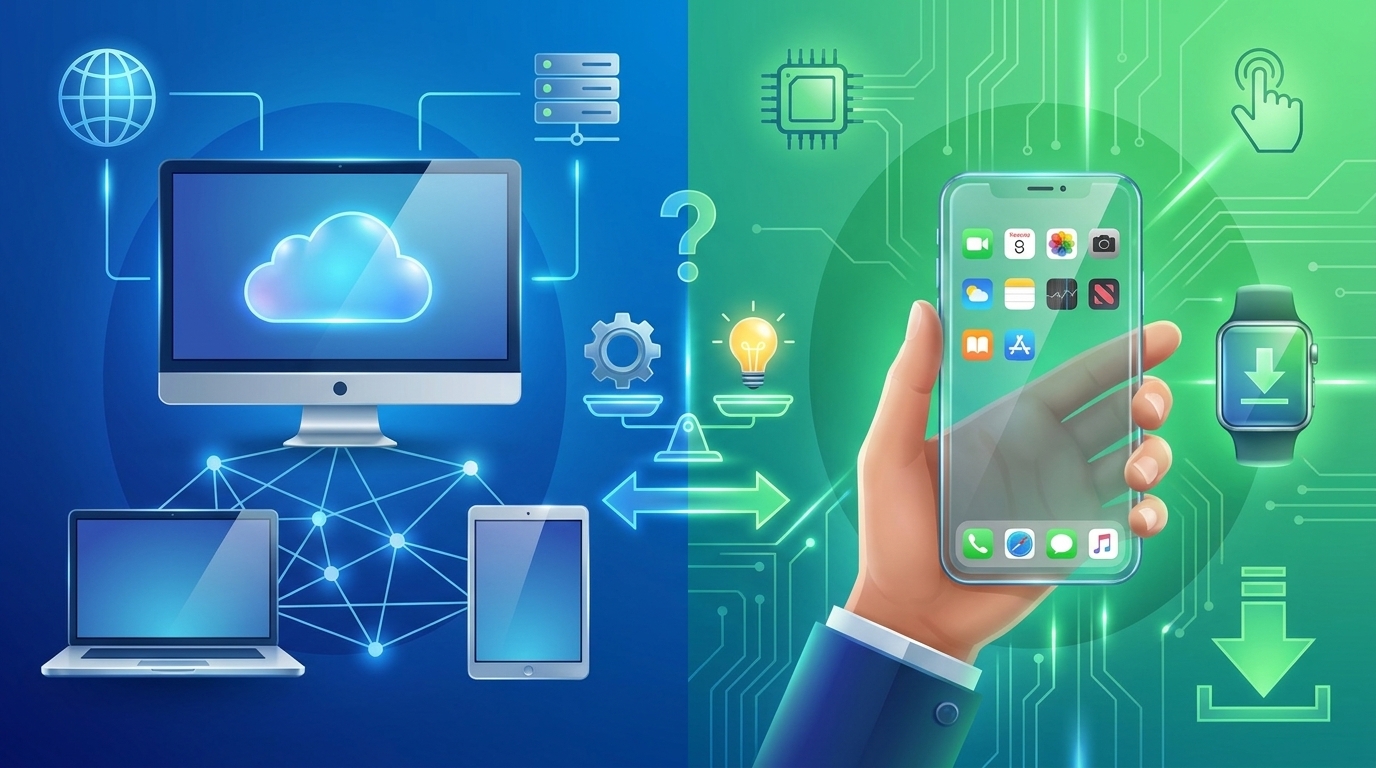
When planning a new digital product or expanding business services, one of the first critical technical decisions you face is choosing the platform: Should you build a custom Web Application, a Mobile App, or a Progressive Web App (PWA)?
Choosing the wrong approach can lead to inflated budget expenses, poor user adoption, or technical rework later down the road. Each platform comes with distinct advantages, user reach characteristics, development timelines, and cost structures.
In this strategic guide, we break down the core differences between web applications and mobile apps in 2026 to help you select the ideal technology stack for your business goals.
Understanding the Technology Options
Before comparing features, let us clarify the three main app models available to modern businesses:
1. Custom Web Applications
Web applications are software programs accessed through web browsers (Chrome, Safari, Edge) across desktop, tablet, and mobile devices. Modern web applications built with frameworks like Next.js, React, and Node.js deliver fast, interactive, desktop-quality software experiences directly in the browser without requiring app store downloads.
2. Native Mobile Applications
Native mobile apps are built specifically for mobile operating systems—iOS (Swift/SwiftUI) and Android (Kotlin)—or cross-platform mobile frameworks like Flutter and React Native. They are downloaded directly from the Apple App Store or Google Play Store and run natively on the user's mobile device.
3. Progressive Web Apps (PWAs)
Progressive Web Apps combine the best of web and mobile technologies. Built using web standards, PWAs can be installed directly onto a user's smartphone home screen, operate offline, and send push notifications without passing through app store approval processes.
Comparing Web Apps vs. Mobile Apps across Key Metrics
To make an informed decision, let us analyze both options across essential business and technical dimensions:
1. User Access and Friction
- Web Applications: Instant access. Users simply click a URL link and begin using your app immediately without downloading or installing anything. Perfect for viral growth, marketing landing pages, B2B SaaS tools, and customer portals.
- Mobile Applications: Higher friction. Users must open an app store, search for your application, download a 50MB-100MB file, and grant permissions before entering the app. However, once installed, mobile apps remain visible on the user's mobile home screen.
2. Device Feature Integration
- Web Applications: Modern browser APIs support camera access, geolocation, file uploading, and local storage. However, background sensor access and complex bluetooth hardware pairing remain constrained compared to native mobile apps.
- Mobile Applications: Full access to smartphone hardware capabilities including camera, biometric hardware (Face ID / Touch ID), Bluetooth, GPS tracking, push notifications, background location, and haptic feedback.
3. Development and Maintenance Costs
- Web Applications: Generally lower cost and faster launch timelines. A single codebase serves desktop, laptop, tablet, and mobile users instantly. Updates deploy immediately to all users without waiting for App Store reviews.
- Mobile Applications: Higher investment. Building separate native iOS and Android applications requires specialized skill sets and double the maintenance upkeep. Cross-platform frameworks like Flutter reduce this cost, but app store compliance maintenance remains ongoing.
4. SEO and Organic Discovery
- Web Applications: Exceptional search engine indexability. Every page, blog post, or feature route can be crawled by Google, bringing passive organic search traffic directly to your application.
- Mobile Applications: Zero search engine indexing for internal app content. App discovery relies primarily on App Store Optimization (ASO), paid ad installs, and external marketing campaigns.
When Should You Build a Web Application?
A Web Application is the ideal choice if your project requires:
- Broad Cross-Platform Accessibility: Serving desktop and laptop business users alongside mobile visitors.
- B2B SaaS or Enterprise Platforms: Complex dashboards, data tables, file management, and reporting interfaces.
- SEO-Driven Business Acquisition: Organic search visibility is a primary growth engine for your company.
- Faster Time to Market: Launching an MVP quickly to validate product market fit with minimal deployment friction.
Examples: Business management systems, CRM dashboards, client portals, e-commerce storefronts, and booking engines.
When Should You Build a Native Mobile Application?
A Mobile Application is the right decision if your project relies on:
- Heavy Hardware and Sensor Interactions: Constant background GPS tracking, camera barcode scanning, or Bluetooth peripheral communication.
- High Daily Engagement & Push Notifications: On-demand service apps, ride-sharing platforms, social networks, and fitness trackers.
- Complex Offline Capabilities: Apps where users perform intensive work without internet coverage for extended durations.
- Consumer Mobile-First Services: B2C platforms where users expect instant home-screen convenience.
Examples: Delivery management tools, mobile banking apps, fitness tracking software, and field service technician tools.
The Hybrid Approach: Combining Web and Mobile
For many growing organizations, the most effective digital strategy is not choosing one over the other, but sequencing them strategically:
- Phase 1: Build a Scalable Web Application to quickly launch your service, onboard early users, refine business logic, and capture search traffic.
- Phase 2: Introduce a Dedicated Mobile App (using frameworks like Flutter or React Native) to enhance mobile engagement, send automated push notifications, and serve power users.
Conclusion
Choosing between web app and mobile app development depends on your target audience, core feature requirements, acquisition model, and growth strategy. Web apps offer maximum reach, lower development costs, and SEO advantages, while mobile apps excel at deep hardware integration, push notification engagement, and offline mobility.
At Introvera, we specialize in building high-performance web applications, mobile apps, and custom software systems designed to scale seamlessly. Contact our engineering team today to evaluate your product roadmap and choose the optimal technology stack for your business.