Modern businesses rely heavily on technology to manage daily operations, improve customer relationships, and make better decisions. Two of the most commonly used business software solutions are Enterprise Resource Planning (ERP) and Customer Relationship Management (CRM) systems.
Although both systems help businesses improve efficiency, they solve different problems.
An ERP system focuses on managing internal business operations, while a CRM system focuses on managing customer relationships and sales activities.
Understanding the difference between ERP and CRM helps businesses choose the right technology solution based on their goals and requirements.
What is an ERP System?
Enterprise Resource Planning (ERP) is a software solution that helps businesses manage and integrate their core internal operations into one centralized platform.
ERP systems connect different departments and processes, allowing businesses to manage information more efficiently.
Common ERP modules include:
- Finance and accounting
- Inventory management
- Human resources
- Supply chain management
- Procurement
- Project management
- Manufacturing operations
- Reporting and analytics
Instead of using separate systems for each department, an ERP system creates a unified business environment where all teams can access accurate and updated information.
What is a CRM System?
Customer Relationship Management (CRM) is a software solution designed to help businesses manage interactions with customers and potential customers.
A CRM system helps companies improve sales processes, marketing activities, and customer support.
Common CRM features include:
- Customer database management
- Lead tracking
- Sales pipeline management
- Email communication
- Customer support management
- Marketing automation
- Customer analytics
CRM systems allow businesses to understand customer needs and build stronger relationships.
ERP vs CRM: The Main Difference
The biggest difference between ERP and CRM is their primary purpose.
ERP Focuses on Business Operations
ERP helps businesses manage internal processes such as:
- Financial management
- Inventory control
- Employee management
- Operations planning
- Resource allocation
The main goal of ERP is improving efficiency and controlling business resources.
CRM Focuses on Customers
CRM helps businesses manage external relationships such as:
- Customer communication
- Sales opportunities
- Marketing campaigns
- Customer satisfaction
The main goal of CRM is increasing sales and improving customer experiences.
Key Differences Between ERP and CRM
1. Business Purpose
ERP
ERP systems are designed to improve internal business operations.
Example:
A manufacturing company can use ERP software to manage raw materials, production schedules, employee information, and financial reports.
CRM
CRM systems are designed to improve customer interactions.
Example:
A sales team can use CRM software to track leads, manage customer conversations, and improve sales performance.
2. Users
ERP Users
ERP systems are commonly used by:
- Business owners
- Finance teams
- HR departments
- Operations managers
- Inventory teams
CRM Users
CRM systems are commonly used by:
- Sales teams
- Marketing teams
- Customer support teams
- Business development teams
3. Data Management
ERP Data
ERP manages internal business data such as:
- Revenue
- Expenses
- Inventory levels
- Employee information
- Operational reports
CRM Data
CRM manages customer-related data such as:
- Customer details
- Purchase history
- Communication records
- Sales opportunities
- Customer preferences
4. Business Benefits
Benefits of ERP Systems
ERP helps businesses:
- Reduce manual work
- Improve operational efficiency
- Manage resources effectively
- Reduce errors
- Generate accurate reports
- Improve collaboration between departments
Benefits of CRM Systems
CRM helps businesses:
- Increase sales
- Improve customer service
- Track potential customers
- Personalize marketing campaigns
- Improve customer retention
Do Businesses Need ERP or CRM?
The answer depends on your business goals.
A business should consider ERP when it needs better control over internal operations.
Examples:
- Growing companies with multiple departments
- Businesses managing inventory
- Manufacturing companies
- Companies needing financial automation
A business should consider CRM when it wants to improve customer relationships and sales performance.
Examples:
- Sales-driven companies
- Service businesses
- Marketing agencies
- E-commerce companies
Can Businesses Use ERP and CRM Together?
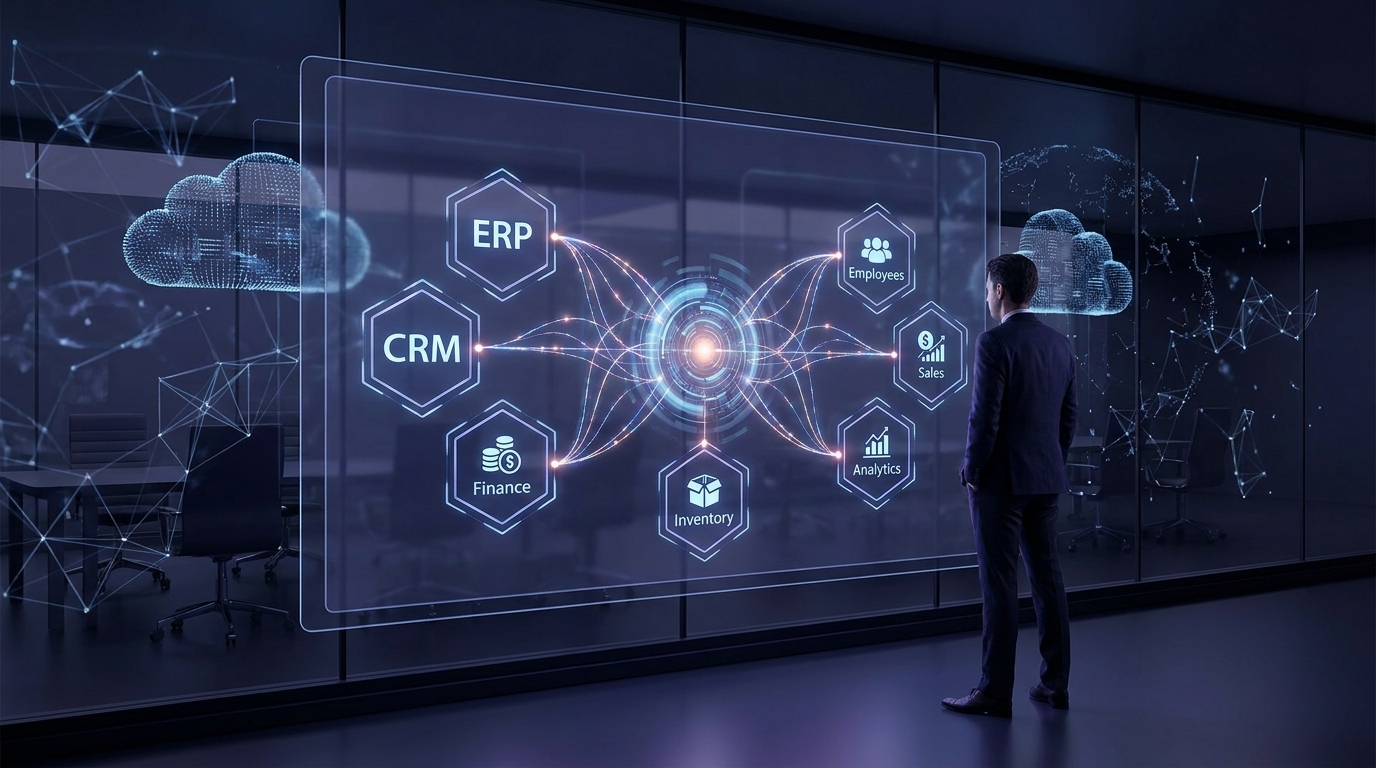
Yes. Many successful businesses use both ERP and CRM systems together.
When integrated, they create a complete business management ecosystem.
For example:
A customer places an order through a company's sales platform.
The CRM system manages:
- Customer details
- Sales communication
- Follow-up activities
The ERP system manages:
- Inventory availability
- Order processing
- Financial records
- Delivery information
This connection creates a seamless flow of information between customers and internal operations.
ERP and CRM Integration Benefits
Combining ERP and CRM provides several advantages:
Better Data Accuracy
Employees can access the same updated information across departments.
Improved Decision Making
Business leaders can analyze customer data and operational data together.
Faster Processes
Automation reduces delays between sales, operations, and finance teams.
Better Customer Experience
Businesses can provide faster and more personalized services.
Common Challenges When Implementing ERP or CRM
Although ERP and CRM systems provide many benefits, businesses should consider some challenges.
Initial Investment
Professional business software requires planning and investment.
Employee Training
Teams need proper training to use new systems effectively.
Data Migration
Moving existing business data into a new platform requires careful planning.
Choosing the Right Solution
Every business has different requirements, so selecting the right system is important.
Custom ERP and CRM Solutions
Many businesses start with standard ERP or CRM software, but growing companies often require customized solutions.
Custom ERP and CRM systems allow businesses to add features based on their unique workflows.
Examples include:
- Custom reporting dashboards
- Industry-specific workflows
- Integration with existing systems
- Mobile applications
- Automated notifications
- Advanced analytics
A customized solution provides more flexibility compared to generic software.
How to Choose Between ERP and CRM
Before selecting a system, ask these questions:
- What business problems are we trying to solve?
- Do we need better internal management or customer management?
- Which departments will use the system?
- What features are essential?
- Will the solution support future growth?
Understanding your business priorities will help you select the right technology investment.
Conclusion
ERP and CRM systems both play important roles in modern business success. ERP focuses on improving internal operations, while CRM focuses on building stronger customer relationships.
For businesses looking to improve efficiency, automate processes, and make data-driven decisions, implementing the right software solution can create significant advantages.
Whether your business needs an ERP system, CRM platform, or a fully customized business management solution, choosing the right technology partner is essential for long-term success.
At Introvera, we help businesses develop customized software solutions, including ERP systems, CRM platforms, automation tools, and digital platforms designed to improve business performance.