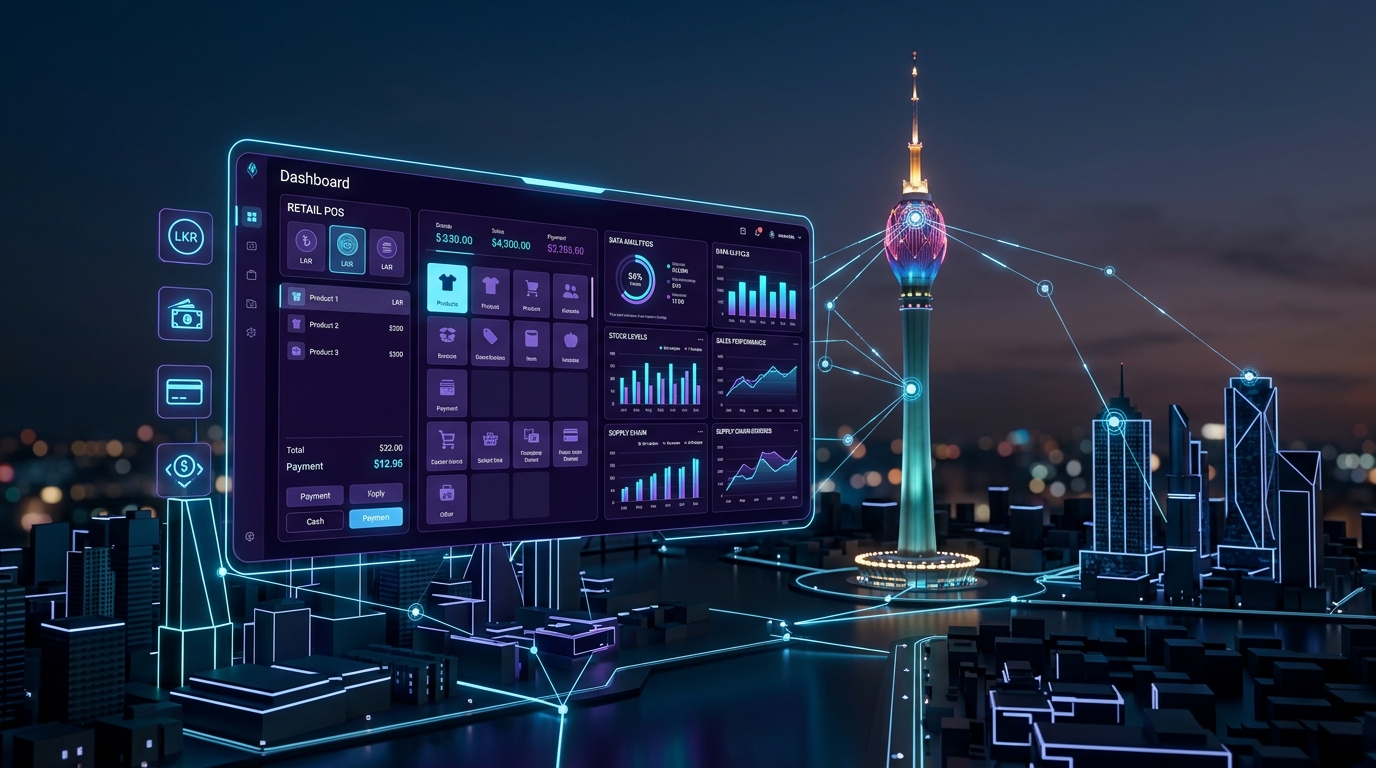
In 2026, the business landscape in Sri Lanka is undergoing a profound structural evolution. Between shifting consumer habits, increased operating overheads, and the rapid adoption of digital banking, businesses can no longer survive on fragmented manual bookkeeping, outdated desktop cash registers, or generic international software that fails to adapt to local realities.
Whether you run a fast-paced retail chain in Colombo, a boutique hotel or cafe along the southern coast of Galle, a wholesale distribution network in Gampaha, or a multi-branch supermarket in Kandy, your software infrastructure directly dictates your profitability.
In this in-depth guide, we explore how forward-thinking Sri Lankan business owners are leveraging custom software, resilient offline-first POS systems, and localized digital integrations to outpace competitors and protect their operating margins.
The Operational Bottlenecks Facing Sri Lankan Businesses
While consumer demand in Sri Lanka is resilient, business owners face unique operational challenges that standard off-the-shelf software packages fail to resolve:
1. Legacy Desktop Billing Systems that Crash
Many local businesses still depend on legacy Windows desktop billing software purchased years ago. These systems store all sales and inventory data on a single vulnerable hard drive. When hard drives corrupt, computers fail during Saturday peak rush hours, or staff accidentally delete files, weeks of financial records vanish without backup.
2. Power Cuts and Intermittent Connectivity
Unlike Western markets where 100% gigabit internet uptime is taken for granted, Sri Lankan businesses frequently face unexpected internet interruptions, fluctuating broadband speeds, or scheduled maintenance. When pure cloud-based billing software loses internet access, cashiers cannot process transactions, long queues form at the counters, and customers walk away frustrated.
3. Disconnected Multi-Branch Operations
As businesses expand from their original location in Colombo into suburbs like Battaramulla, Nugegoda, Negombo, or outstation hubs like Kurunegala and Kandy, tracking inventory becomes chaotic. Without centralized real-time synchronization, store managers resort to phone calls, handwritten invoices, and messy WhatsApp groups just to confirm stock availability between branches.
4. Inventory Leakage and Unchecked Price Fluctuations
With inflation and dynamic wholesale supply costs, product purchase prices in Sri Lanka fluctuate frequently. When retail systems lack automated landed-cost calculations and batch tracking, businesses accidentally sell merchandise below profitable margins or suffer unnoticed stock shrinkage across warehouse floors.
Why Custom Offline-Ready Cloud POS is the Answer
Modern Sri Lankan enterprises are transitioning away from both fragile legacy desktop software and fragile web-only POS systems in favor of offline-first cloud architecture.
How Offline-First Cloud Architecture Works:
- Instant Local Billing: Every terminal runs a resilient local database engine (such as SQLite or IndexedDB) that processes sales, scans barcodes, and prints thermal receipts in milliseconds with zero internet required.
- Automated Background Sync: As soon as 4G, 5G, or fiber connectivity reconnects, the system silently uploads all queued sales transactions to a secure central cloud server.
- Executive Mobile Dashboard: The business owner can open their smartphone from anywhere in the world and view live, real-time sales numbers, top-selling items, cash drawer balances, and branch performances across Colombo, Kandy, and Galle simultaneously.
Integrating Sri Lanka's Modern Digital Payment Ecosystem
Cash and traditional credit cards are no longer the only way Sri Lankan consumers pay. A modern point-of-sale and e-commerce system must seamlessly integrate with Sri Lanka's thriving fintech ecosystem:
1. Central Bank LankaQR Integration
The Central Bank of Sri Lanka (CBSL) has prioritized LankaQR to lower transaction fees for merchants. While standard card swipes often incur high interchange merchant discount rates (MDR), LankaQR transfers settle instantly at a fraction of the cost. A custom POS displays a dynamic LankaQR code directly on the customer-facing screen matching the exact bill amount, enabling customers to scan and pay in seconds using commercial bank apps like Flash, FriMi, Genie, or Q+ without touching cash.
2. Local Payment Gateways (PayHere, WebXPay, Genie)
For businesses selling products online, integrating international gateways like Stripe is often restricted or complicated due to local banking regulations. Custom software built by local engineers connects directly with trusted Sri Lankan payment gateways like PayHere, WebXPay, and direct bank IPG channels, ensuring smooth LKR settlements directly into your corporate bank accounts.
3. Buy-Now-Pay-Later (BNPL) Solutions
For apparel retailers, electronics stores, and lifestyle brands, integrating BNPL platforms such as Koko and Mintpay into checkout systems has proven to increase average order values by 30% to 45%. Enabling flexible instalment payments at checkout removes purchase hesitation for local shoppers.
Transitioning from Spreadsheets to a Custom Sri Lankan ERP
Spreadsheets are often the starting point for small businesses, but as teams grow, they become a dangerous liability. Disconnected spreadsheets lead to formula errors, unauthorized formula edits, and zero audit trails.
A custom lightweight Enterprise Resource Planning (ERP) platform built specifically for your business provides:
- Automated VAT & SSCL Compliance: Automatically calculate and format Inland Revenue Department (IRD) compliant invoices, Social Security Contribution Levies (SSCL), and Value Added Tax (VAT) reports with a single click.
- Automated Reorder Alerts: Prevent stockouts by receiving automated notifications when fast-moving raw materials or shelf items hit minimum safety thresholds.
- Role-Based Security: Protect your business from internal shrinkage by restricting cashier permissions. Cashiers can only perform permitted billing actions, while price overrides, refunds, and sensitive financial reports remain locked behind owner biometric or PIN authorization.
- Supplier & Purchase Order Tracking: Manage local supplier credit terms, record partial shipments, and schedule supplier payments without losing track of outstanding liabilities.
The Advantage of Partnering with a Local Software Studio
While some businesses consider generic foreign SaaS subscriptions, they quickly encounter major pain points:
- Costly Recurring USD Fees: Foreign subscriptions charge recurring USD per-user fees that escalate whenever currency exchange rates fluctuate.
- Zero Local Context: International software providers will not configure LankaQR, cannot format Sri Lankan tax reports, and offer no phone support during local business hours.
- Slow Ticketing and No On-Ground Support: When issues arise, foreign platforms offer impersonal ticket queues with no local after-sales service.
Partnering with an engineering studio like Introvera gives you tailored software designed around your daily physical operations, flexible hosting on AWS or cost-effective high-performance VPS based on your budget, dedicated after-service and maintenance, and direct communication in English and Sinhala from software engineers based right here in Sri Lanka. If your business specifically requires full codebase transfer, an optional source code buyout agreement is also available upon request.
Action Plan: How to Upgrade Your Business Tech in 2026
If your business is still wrestling with slow billing, manual inventory checks, or disconnected systems, here is a practical roadmap to modernize:
- Map Your Biggest Time Drains: Identify which daily tasks take up the most manual hours—whether it is end-of-day cash reconciliation, calculating stock levels, or re-typing invoices.
- Eliminate Single Points of Failure: Replace unbacked desktop billing computers with an offline-capable cloud system that guarantees zero lost data.
- Unify Your Sales Channels: Connect your physical store counters, warehouse inventories, and online e-commerce catalog into a single centralized database.
- Partner with Experienced Engineers: Work with software engineers who understand both enterprise software architecture and the specific commercial dynamics of Sri Lanka.
Conclusion
In 2026, technology is the single biggest differentiator between Sri Lankan businesses that struggle with rising overheads and those that scale profitably. By investing in tailored custom software and robust POS systems, you protect your margins, delight your customers, and establish a rock-solid foundation for multi-branch expansion.
At Introvera, we engineer enterprise-grade custom software, high-speed POS systems, and business automation platforms built specifically for growing businesses. Contact our Colombo engineering team today to turn your operational challenges into a seamless digital advantage.